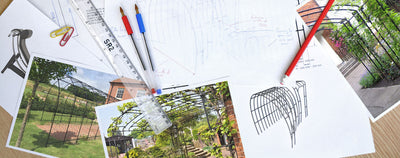

Garden designers have long understood that a truly beautiful garden isn’t one uninterrupted space - it’s a sequence. A progression of spaces, each with its own mood, planting style and purpose.
The concept of “garden rooms” is rooted in classic English garden design - seen in places like Hidcote and Sissinghurst - but it translates beautifully to American landscapes of every scale. Whether you garden in New England, the Midwest, California or the Pacific Northwest, dividing outdoor space thoughtfully adds depth, privacy and flow.
You don’t need acres to achieve this effect. Even a compact backyard gains atmosphere when gently divided using vertical elements, planting and carefully placed architectural structures. With the right combination of arches, obelisks, zinc planters and screens, you can create the layered, immersive feeling that defines timeless garden design.
Here are practical ways to bring garden rooms into your own space using Agriframes structures.


Start With a Visual Anchor
Every garden room needs a beginning - a threshold that signals a shift in mood.
An Agriframes arch, positioned at the start of a pathway or between two planting areas, is one of the most effective ways to define this transition. Its height naturally draws the eye upward, and once clothed in climbing roses, clematis, jasmine or even grapevines, the arch becomes a living gateway from one area to the next.
Arches regulate the flow of a garden. Rather than seeing everything at once, the landscape reveals itself gradually - creating anticipation and discovery.
This principle works just as well in a suburban backyard as it does in a larger country property.


Use Screens to Create Privacy and Subtle Division
Screens are one of the most versatile tools for shaping outdoor space, especially in smaller or more exposed settings.
Agriframes steel screens divide space without blocking light, offering privacy while maintaining openness. In American gardens - where neighboring homes may sit closer together - screens provide softness and separation without the heaviness of solid fencing.
Use a screen to:
- Partially shield a seating area
- Define an outdoor dining space
- Separate ornamental planting from a kitchen garden
- Create a sheltered reading nook
The goal isn’t to close spaces off, but to suggest boundaries - allowing views to unfold gradually.


Add Vertical Accents Within Each Room
Once a garden room is defined, it needs internal structure - something that gives it rhythm and focus.
Agriframes obelisks provide this beautifully. Placed individually, an obelisk becomes a sculptural focal point in a border. Used in pairs or repetition, they create symmetry and architectural presence.
They are especially effective because they provide structure in every season:
- In spring, they anchor emerging growth
- In summer, they support climbers like roses, sweet peas or clematis
- In fall and winter, their silhouette maintains visual interest
In regions with strong seasonal change, this year-round presence becomes even more important.


Use Planters to Shape Edges and Transitions
Planters can define garden rooms more gently than walls or hedges. Agriframes zinc planters offer a refined, substantial way to mark boundaries while remaining flexible.
Use them to:
- Frame an entrance to a patio
- Define the edge of a lawn
- Anchor the corners of a deck
- Introduce evergreen structure in colder climates
Large planters filled with multi-stem shrubs, ornamental grasses or clipped boxwood instantly add maturity and permanence to a space.
Because they’re moveable, planters allow the layout to evolve over time - a practical advantage in American gardens where lifestyles and outdoor uses shift seasonally.
Aged Zinc Metal Planters
View all


Plant for Atmosphere, Not Just Color
Once structure is in place, planting brings personality to each garden room.
You might create:
- A romantic space with climbing roses and lavender
- A calm, textural room of grasses and shade perennials
- A sun-filled courtyard framed with planters and aromatic herbs
- A vertical garden defined by obelisks and airy flowering plants
Each room only needs a subtle shift in planting palette, height or texture to feel distinct.
Structure ensures these differences feel intentional rather than accidental. Find out more about how to add structure to your backyard here.


Think of the Garden as a Journey
A garden divided into rooms encourages movement. As visitors pass beneath arches, around screens and between planters, the landscape unfolds.
Place structural elements so they gently guide the eye:
- An obelisk rising above planting
- A planter positioned at a turn in the path
- A screen hinting at what lies beyond
This layering creates curiosity and slows the experience - the hallmark of thoughtful design.


The Enduring Appeal of Garden Rooms
Dividing a garden into rooms brings intimacy and sophistication without complication. It makes large spaces feel welcoming and smaller spaces feel expansive.
With the help of Agriframes arches, obelisks, zinc planters and screens, you can shape outdoor areas that feel grounded, purposeful and personal - landscapes that reveal themselves gradually rather than all at once.
Whether you have a city patio, a suburban backyard, or a country property, garden rooms add structure, flow and lasting interest throughout the year.